Every creative industry produces a few individuals who grow larger than the medium that first introduced them. Their names stop functioning as credits and begin operating as institutions. In Indian cinema, music has always been inseparable from the film itself, and playback singers—disembodied yet omnipresent—have long been among the most influential forces shaping popular culture. Few, however, have come to define this role as completely as Arijit Singh.
Which is precisely why his reported decision to step away from playback singing has triggered such a visceral reaction.
For an industry—and an audience—accustomed to equating Indian music with Hindi film soundtracks, the idea of Arijit Singh no longer lending his voice to cinema feels almost unthinkable. Social media has responded predictably: disbelief, panic, petitions disguised as affection. Yet the more interesting question is not why would he leave, but rather why wouldn’t he?
Indian film music has long enjoyed a privileged position. It is one of the country’s great cultural exports, a system that once offered singers unmatched reach and legitimacy. Over time, however, that system has hardened. What was once a platform has increasingly come to resemble a gate—one controlled by a small group of studios, labels and industry powerbrokers who decide not just what music gets made, but how artists are paid, credited and remembered.
Independent music, by contrast, has always existed at the margins—present, but rarely empowered. That imbalance began to shift with the rise of streaming platforms and social media, which dismantled the old distribution bottlenecks. Suddenly, artists no longer needed films to be heard. Albums, EPs and concept-driven projects found audiences on their own terms. For the first time in decades, Indian listeners began engaging with music as music, not merely as accompaniment to cinema.
Arijit Singh’s timing, then, is not impulsive—it is precise.
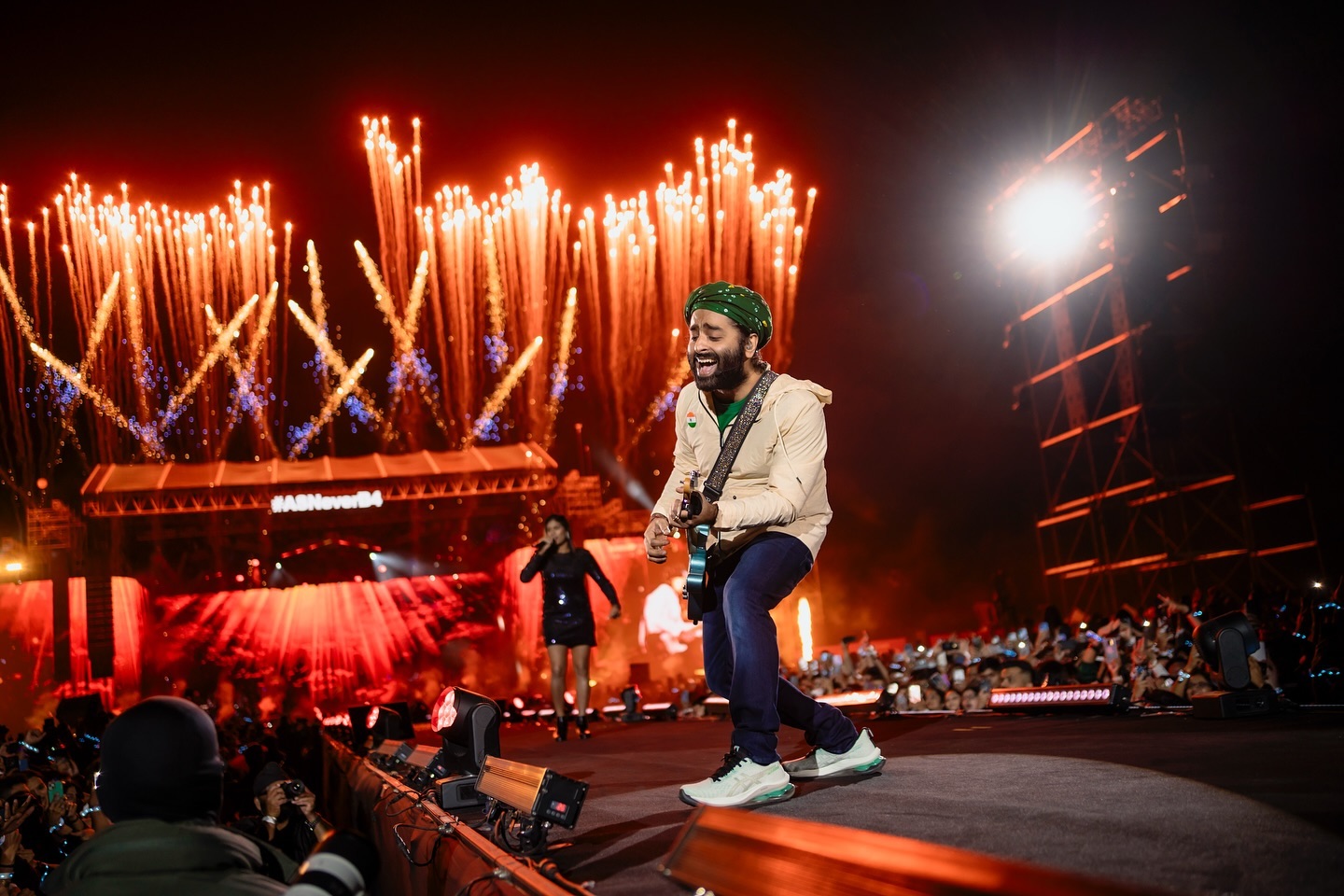
He is not walking away from music. Anyone who has watched him perform live understands that singing is not a profession he inhabits but a state he occupies. What he appears to be stepping away from is the machinery of playback singing—the transactional nature of it, the loss of ownership, and the reduction of a voice to a functional component of a larger commercial product.
The Hindi film music industry’s reputation has also suffered in recent years. Accusations of creative stagnation and exploitative practices are no longer whispered; they are discussed openly. Arijit himself has previously spoken about the imbalance of power between artists and the businesses that profit from their work, describing a system driven by verbal agreements, opaque negotiations and inconsistent compensation. His critique was not emotional; it was structural.
In the streaming era, such structures are increasingly indefensible.
Ownership has become the defining currency of modern music. For a contemporary artist, releasing independent work is not merely a creative choice but a financial and strategic one. Film music rarely offers rights retention or long-term control. Independent releases do. The fact that many composers and singers now rely more on concerts and non-film projects than on cinema alone speaks volumes about where the real value has shifted.
Arijit Singh’s numbers underline just how far he has transcended the traditional film-music ecosystem. He is currently the most-followed artist globally on Spotify, with over 170 million followers and tens of millions of monthly listeners—figures that place him ahead of artists such as Taylor Swift. For seven consecutive years, he has been India’s most-streamed artist. These are not film-music numbers; they are global pop-star numbers.
In other words, Arijit Singh no longer needs cinema to reach his audience. Cinema needs him.
The broader industry data supports this shift. Over the past five years, India’s music consumption has steadily moved away from being overwhelmingly film-centric. Where film music once accounted for nearly four-fifths of listening, artist-first music now commands a substantial and growing share. Rap, independent pop, regional fusion and genre-led projects have broken into the mainstream, reshaping listener expectations.
Even mainstream cinema has begun to reflect this reality. The idea that a major Hindi film could headline an Indian rapper on its title track would have seemed improbable a few years ago. Today, it is evidence of an industry being forced to respond to cultural change rather than dictate it.
If and when Arijit Singh releases an independent album or single, it will not simply be another high-profile drop. It will be a statement about authorship. About legacy. About refusing to allow one’s work to be subsumed by a system that treats creativity as an input rather than an asset.
For the global audience, it may register as just another release. For Indian music, it would mark something far more consequential: the country’s most influential singer choosing ownership over convention, and autonomy over inherited prestige.
The playback crown, it seems, is no longer enough.
And that may be the most important song Arijit Singh has yet to sing.