Indian celebrities are now active participants in the country’s business economy. They invest in startups, launch consumer brands, sit on boards, negotiate equity deals and, in some cases, operate holding companies that control multiple commercial interests. What has not kept pace with this shift is how these business roles are documented, evaluated and communicated within professional ecosystems.
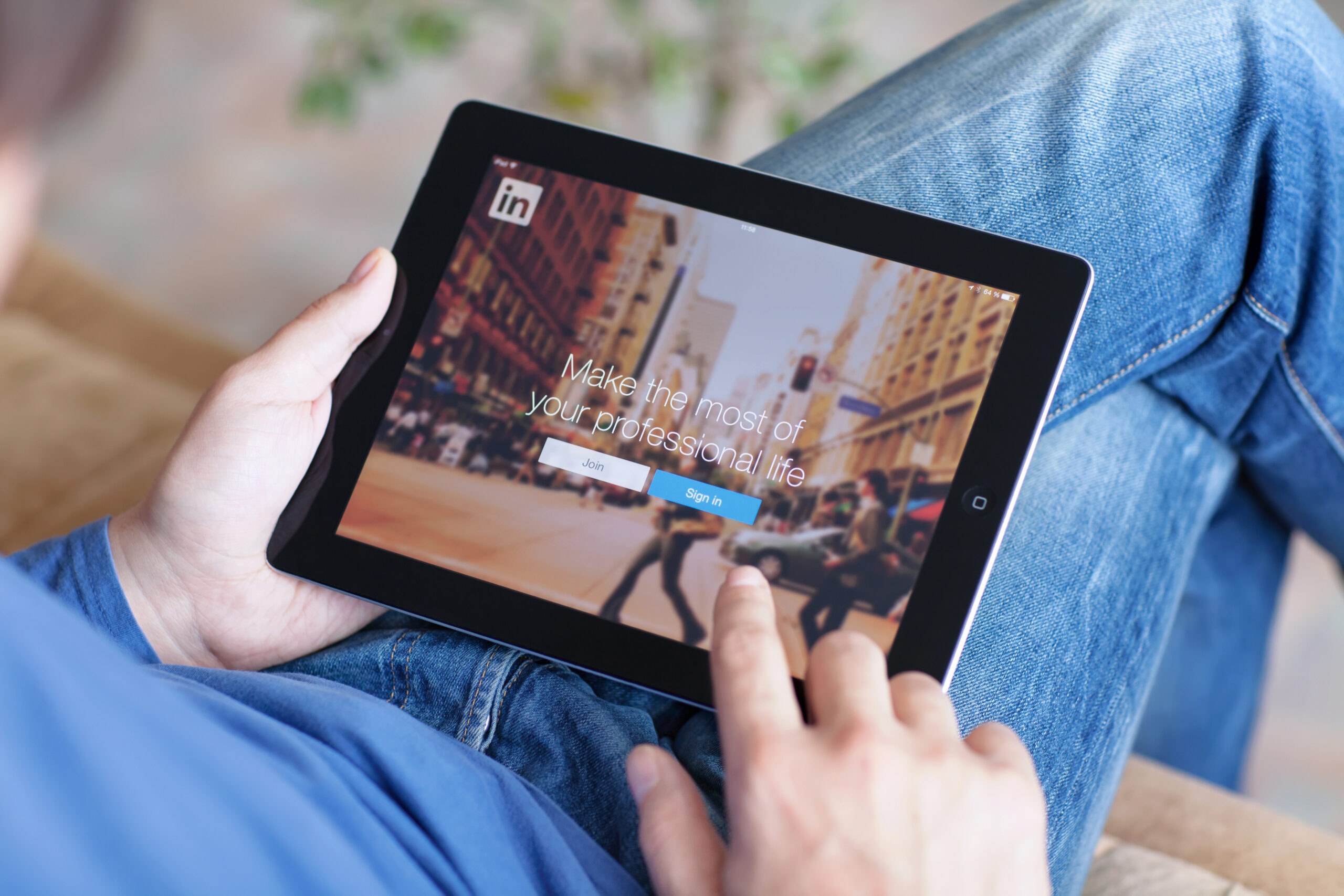
That gap is precisely why a LinkedIn account has become necessary—not optional—for celebrity entrepreneurs. This is not about social presence. It is about how business systems work.
Business decisions run on verification, not visibility
When a celebrity invests in a company, three groups immediately begin assessing that involvement: founders, institutional capital and media. Each group asks different questions, but all require the same input—verifiable information.
Founders want to know whether the celebrity is an equity holder or a paid partner, whether involvement is short-term or ongoing, and whether the celebrity brings operational value beyond attention. Venture capital firms examine governance risk, conflicts of interest and the durability of the association. Journalists track ownership, influence and accountability, especially in consumer-facing businesses.
None of these questions are answered by Instagram announcements or lifestyle interviews.
In business practice, LinkedIn functions as a verification layer. It is where roles, titles, timelines and affiliations are checked quickly and informally before conversations progress. For celebrity entrepreneurs, the absence of this layer forces stakeholders to infer facts—often incorrectly.
Inference creates friction. Friction slows deals.
Celebrity investing has moved into regulated, scrutinised territory
Between 2020 and 2026, celebrity participation in Indian businesses expanded into sectors that attract regulatory and institutional scrutiny: fintech, health and wellness, personal care, financial services, edtech and digital platforms. These sectors demand clarity on ownership, advisory responsibility and influence over decision-making.
As celebrity-owned brands and investments scale, they intersect with compliance frameworks, investor reporting and disclosure norms. In these environments, ambiguity around a public figure’s role is not merely inconvenient—it becomes a risk factor.
LinkedIn offers a simple way to reduce that risk by clearly stating:
- whether the celebrity is a founder, investor, advisor or board member
- the duration and nature of involvement
- the scope of responsibility
- This information does not need promotion. It needs accuracy.
Capital flows faster when roles are legible
Institutional capital operates on pattern recognition. Investors look for signals that reduce uncertainty: structured ownership, clear governance, documented experience. Celebrity capital attracts interest, but it also raises questions. Those questions are resolved faster when professional information is readily available.
A LinkedIn profile acts as a commercial shorthand. It allows potential partners to understand a celebrity’s investment behaviour at a glance—sector focus, deal frequency, level of involvement. This is particularly relevant as more celebrities adopt portfolio strategies rather than one-off investments.
Without this clarity, celebrity investors risk being perceived as unpredictable, even when they are not.
Media narratives are shaped by what is accessible
As celebrity entrepreneurship has grown, so has coverage of it. But journalism relies on accessible records. When business roles are not clearly documented, coverage defaults to personality-driven framing rather than economic analysis.
A LinkedIn profile allows celebrity entrepreneurs to anchor their business identity in facts rather than headlines. It becomes a reference point that reporters, analysts and researchers can rely on when mapping ownership, influence or governance.
This is not about controlling the narrative. It is about preventing distortion through absence.
LinkedIn distinguishes ownership from endorsement
One of the most persistent problems in celebrity-led business reporting is the collapse of distinction between endorsement and ownership. When announcements are made through entertainment channels, the two often appear interchangeable—even when the financial implications are entirely different.
LinkedIn allows celebrity entrepreneurs to draw that line explicitly.
Equity ownership, advisory roles and board participation can be stated clearly and permanently. This distinction matters not only for credibility, but for accountability. Ownership implies responsibility. Endorsement does not.
As celebrities move deeper into business, the market increasingly expects them to accept that responsibility visibly.
The platform speaks to the audience that matters
Instagram reaches consumers. LinkedIn reaches decision-makers.
Founders, CXOs, policy professionals, institutional investors and global partners operate primarily on LinkedIn when evaluating people. For celebrity entrepreneurs seeking serious partnerships, cross-border opportunities or institutional capital, absence from this space is a structural disadvantage.
This is especially relevant as Indian celebrity investors increasingly engage with global businesses and funds, where professional documentation is standard practice.
There is a misconception that having a LinkedIn account requires constant posting or public thought leadership. It does not.
For celebrity entrepreneurs, the value of LinkedIn lies in documentation, not performance:
- accurate role descriptions
- consistent timelines
- transparent affiliations
A minimal, factual profile often carries more credibility than frequent posting. Restraint signals seriousness.
As celebrity businesses scale, informality stops working
Early-stage celebrity involvement benefited from informality. Scale removes that privilege.
As revenues grow, investors multiply and regulatory attention increases, businesses require systems. Those systems depend on clear records and professional representation. Celebrity entrepreneurs are not exempt from this logic. In fact, their public status increases the need for precision.
A LinkedIn account is one of the lowest-cost, highest-impact ways to provide that precision.
Indian celebrities have successfully transitioned from endorsement-driven earners to business owners and investors. That transition changes how they are evaluated. Influence alone is no longer the metric. Structure, clarity and accountability are.
LinkedIn does not replace fame. It translates business participation into a format that markets, institutions and professionals understand. That is why a LinkedIn account is no longer optional.