The search for inner calm has never felt more urgent in a culture obsessed with achievement, deadlines, and constant digital noise. Modern life has made “overwhelm” a default setting, pushing many to explore alternative paths of healing and self-discovery. Among the philosophies making a quiet comeback, Osho’s teachings stand out — bold, rebellious, and deeply relevant to the restless modern mind.
To understand how these teachings fit into today’s landscape, Glam and Gain sat down with Ma Dhyan Prachi, a meditation facilitator at Osho Dham, known for her grounded, no-nonsense way of translating Osho’s wisdom for the contemporary seeker. Her journey reflects the very essence of what Osho taught — awareness, acceptance, celebration, and freedom from inner clutter.
Here are a few excerpts from our conversation before we dive into the full interview.
In an age of burnout and mental unrest, how relevant are Osho’s teachings today?
Osho’s teachings are more relevant today than ever because he spoke directly to the modern mind. He understood that today’s stress doesn’t come from work alone, but from the constant noise, comparisons, and pressures we carry inside. Osho’s approach is not about escaping life but transforming our inner space so that life becomes lighter and more joyful. His active meditations, especially Dynamic and Kundalini, were designed for exactly this age—where people cannot sit silently at first because their minds are overflowing. Through movement, breath and catharsis, the burden slowly melts. Osho teaches us that burnout happens when we live out of rhythm with ourselves. Once we reconnect with our own centre, energy flows naturally, creativity blossoms, and life no longer feels like a struggle. In that sense, his teachings offer a very contemporary, scientific route to inner balance and mental clarity.
Many celebrities have found resonance in Osho’s philosophy. What do you think attracts public figures to his message?
Celebrities often live under intense scrutiny—constant expectations, public judgment, and pressure to perform. Osho’s message speaks to them because he invites people to drop all masks. He doesn’t tell you to become “good,” “moral,” or “perfect.” He simply asks you to be authentic. That is incredibly liberating for anyone living in the spotlight. Osho also celebrates individuality. He says each person is a unique expression of existence, and when you honour your uniqueness, life becomes rich. Celebrities relate to this because they are constantly boxed into images and roles. Osho gives them permission to be human again—to feel, to fail, to explore, to meditate, and to evolve without guilt. His emphasis on creativity, celebration and inner freedom naturally attracts artists. They find in his words both grounding and expansion. In many ways, Osho offers them a safe inner space where they can be real, not just admired.
For someone new and struggling with anxiety or depression, where should they begin with Osho’s teachings?
For someone dealing with anxiety or depression, Osho would first say: don’t fight your emotions. Fighting creates more turmoil. Begin with acceptance. His meditations are powerful tools because they allow feelings to be expressed safely without repression. I usually recommend starting with Nadabrahma meditation for calming the mind and Kundalini meditation in the evening to shake off accumulated stress. Osho’s talks—especially “The Book of Secrets” and “Joy: The Happiness That Comes from Within”—help people understand the mind’s patterns gently and compassionately. The journey is not about forcing positivity but creating space inside. When people allow their emotions to flow instead of judging themselves, a natural lightness arises. Osho always said that meditation is medicine. It brings you back to the present moment, where healing begins. And for beginners, even 20–30 minutes daily can create a profound shift in emotional stability.
Nowadays people chase success but often lose touch with themselves. What would Osho say about the right balance between material growth and spiritual grounding?
Osho never denied the material world. In fact, he often said that a truly spiritual person should also be graceful and abundant in the outer world. What he emphasised was consciousness. When success becomes an obsession, we lose our centre; we start living for achievements rather than for life itself. Osho would say: let success happen, but don’t let it own you. Work with joy, not tension. Earn with creativity, not competition. Meditation is what brings balance—it acts like an inner compass. When you meditate, you realise that material growth is meaningful only when your inner world is peaceful and alive. Osho invited people to live a life of “Zorba the Buddha,” where you enjoy the pleasures of the earth but remain rooted in awareness. When your actions arise from clarity instead of insecurity, success becomes a celebration, not a burden.
“Self-love” is a phrase widely used today. How would Osho redefine self-love in a deeper, more conscious sense?
Osho’s understanding of self-love goes far beyond pampering or motivational talk. For him, self-love is a deep acceptance of who you are in this moment—without judgement, comparison or shame. He said that unless you love yourself, you cannot love anyone else because all relationships begin from your own centre. Self-love, in Osho’s sense, means becoming friendly with your mind, your body, your emotions. It means dropping the inner critic that society planted in you. When you accept yourself fully, transformation happens naturally; you evolve without force. Osho would say that self-love is not ego—it’s the foundation for meditation. A person who loves herself is relaxed, rooted and open. Only then can awareness grow. So self-love, according to Osho, is a path to consciousness, not self-indulgence. It is the courage to be yourself completely.
Money and spirituality are often seen as opposites. What was Osho’s view on abundance, and how can seekers cultivate wealth consciously without guilt or attachment?
Osho never saw money as the enemy of spirituality. He said money is simply a tool—neither good nor bad. The problem arises when money becomes your identity. According to Osho, abundance is natural when your energies flow harmoniously. He encouraged people to live beautifully, to enjoy comfort, and to create prosperity, but with awareness. The key is non-attachment: use money, don’t become used by it. When seekers meditate regularly, they stop chasing wealth out of fear or insecurity. Instead, they create value out of joy and creativity. That naturally brings abundance. Osho often reminded us that a spiritual person can be rich, but their richness comes from inner fulfilment. If you earn with clarity, share with compassion, and stay centred, money becomes an extension of your freedom—not a chain. Wealth, then, becomes a conscious celebration rather than a burden.
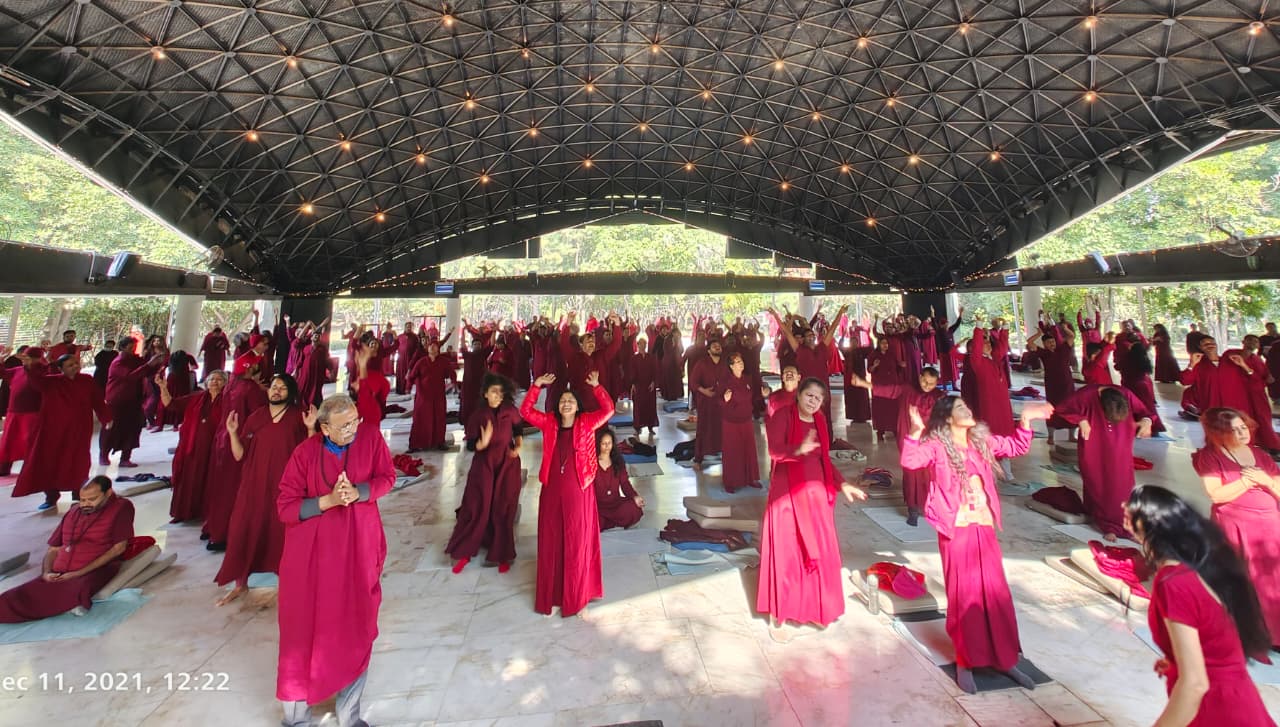
In the tranquil atmosphere of Osho Dham, the annual Osho Dhyan Diwas Celebration will be held from 10 to 14 December 2025. Guided by Ma Dharm Jyoti and Swami Chaitanya Keerti, the five-day gathering will offer a dynamic blend of meditation, silence, music, dance, satsang and collective celebration.
The focal point of the event is 11 December, celebrated as Dhyan Diwas, Osho’s birthday. Marked with joy and gratitude, the day invites seekers from India and abroad to connect deeply with Osho’s presence through meditation and remembrance.
Later in the month, Osho Dham will host a special Residential Camp for Children and Parents from 25 to 28 December 2025. The Children & Meditation Camp encourages creativity, play, expression and awareness, helping children grow naturally and joyfully. Simultaneously, the Parenting Is a Great Art camp guides parents into silence, relaxation and understanding, nurturing a more conscious and loving family environment.
For more information, visit https://oshoworld.com/osho-dham
Takeaway
As our conversation with Ma Dhyan Prachi unfolded, one thing became clear: Osho’s teachings aren’t relics of a bygone era. They are living tools—alive, adaptable, and deeply aligned with the emotional challenges of today’s world. In the hustle of modern ambition, Osho’s message offers a pause, a breath, and a path inward. Whether you are chasing success, struggling with anxiety, or simply seeking meaning, his philosophy invites a simple question: Are you living from your centre?
And perhaps that’s where all transformation begins.