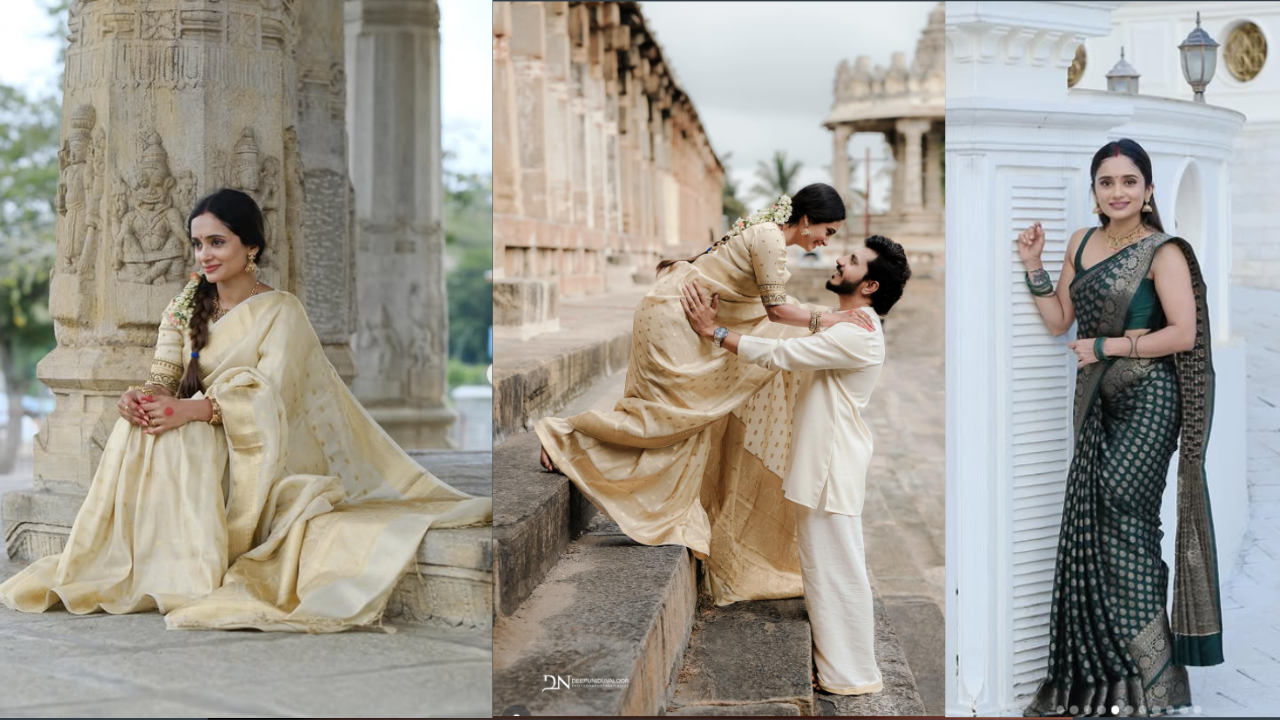
Until recently, the creator-to-entrepreneur wave in India mostly produced short-lived brand experiments. But every once in a while, someone builds a business that refuses to fade into the algorithm. Panchali Vastra, the saree brand founded by Kerala-based creators Meeth and Miri, is one such arrival — a label that began without a blueprint yet grew with a clarity many planned ventures fail to achieve.
Their story is compelling because it begins long before they thought of becoming entrepreneurs. As content creators, they had already developed a strong, cross-state following for their lifestyle, humour, and cultural sensibilities. But the most striking pattern came from something simple: the way Miri carried a saree. Audiences loved it—deeply, consistently, and almost instinctively. They asked where she sourced them, what fabrics she preferred, how she styled them, and whether she could recommend similar pieces. Without realising it, the couple had been sitting on a strong, validated market signal.
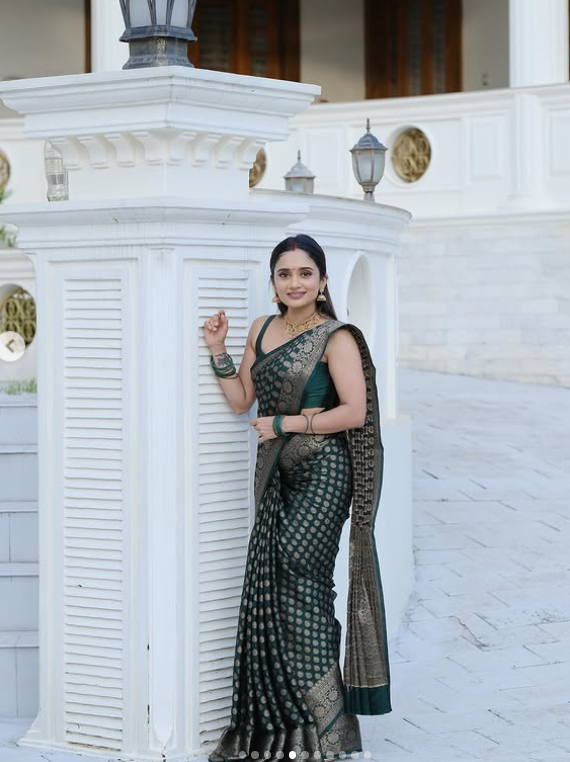
When they finally acted on it, there was no elaborate launch strategy or curated brand reveal. They shared a few sarees they had sourced, and their audience responded immediately. The familiarity and trust built over years converted organically into early sales. What most entrepreneurs chase through campaigns and advertising, this couple earned through long-term credibility. Panchali Vastra grew from that foundation.
But trust and aesthetics alone cannot build a business. The shift from creators to founders came with a steep learning curve. They were shooting collaborations during the day, replying to customer messages in between, coordinating dispatches in the evening, and packing orders far past midnight. It was a phase that forced them into operational maturity overnight. And the hardest lesson arrived brutally early: a Banaras vendor they trusted disappeared with nearly ₹4 lakh of their investment. For a business that had started with only ₹7,000, the setback was crushing.
Instead of derailing them, it recalibrated their approach. They started verifying every vendor personally, checking fabric quality across suppliers, learning the geography of textile clusters, and building relationships rooted not in excitement but in due diligence. That loss became the foundation of their financial discipline, and their first real understanding of what entrepreneurship demands. “It taught us that creativity is only half the journey,” Miri says. “The other half is caution.”

The pressure of building a business coincided with another major shift in their life: Miri becoming a mother. Many founders pause their entrepreneurial pursuits at such a juncture. She didn’t. Instead, she approached it with sharper discipline and clearer boundaries. Her day became more structured, her planning more intentional, and her presence in every role—mother, creator, founder—more focused. It wasn’t about performing all roles flawlessly; it was about showing up with consistency. That outlook quietly strengthened the brand’s identity.

Panchali Vastra’s team also grew in an unusually organic way. Seeing the couple’s overwhelming workload, Miri’s sister stepped in to help on an ordinary day, taking over order management and customer communication. One by one, other family members joined. Today, the brand is powered by a nine-member family-run team handling everything from packing to logistics. This familial structure became one of Panchali Vastra’s strongest assets, keeping the brand grounded, reliable, and personally connected to its customers.
What differentiates them in a crowded fashion market is their unwavering sense of who their customer is and what their audience expects from them. Instead of trying to mimic the strategies of larger brands or follow seasonal trends blindly, they relied on the cultural intuition they developed as creators. Their brand identity mirrors their on-screen personality—unfiltered, warm, responsive, and deeply rooted in everyday Indian realities. Customers sense that authenticity and return for it.
Their business insights are shaped not from books but from lived experience. If they were to rebuild from scratch, they say they would begin with more structure, especially in vendor selection and backend systems. But they would still rely first on audience validation rather than inventory speculation. They strongly believe that creators should test their demand before investing heavily, start with a manageable scale, and reinvest profits into building a stronger backbone rather than chasing aesthetics or a glamorous launch. They view influence not as a shortcut but as an advantage only when used with clarity and responsibility.
Their advice to upcoming creator-entrepreneurs is grounded in this realism. They encourage creators to build a product that genuinely reflects their identity rather than copying another influencer’s formula. They emphasise that audiences follow individuals, not trends, and that the truest differentiator in the market is authenticity. They also insist that consistency matters more than dramatic moments—whether in content creation or in business operations.
Today, just over a year since its inception, Panchali Vastra has become a name recognised across Kerala and South India. The brand’s trajectory offers a template for the next wave of regional entrepreneurs: a path where trust is a currency, community is the foundation, cultural intuition is a competitive advantage, and growth is built on discipline rather than hype.